CJ’s Newsletter: 200 Abnormally Useful Ideas

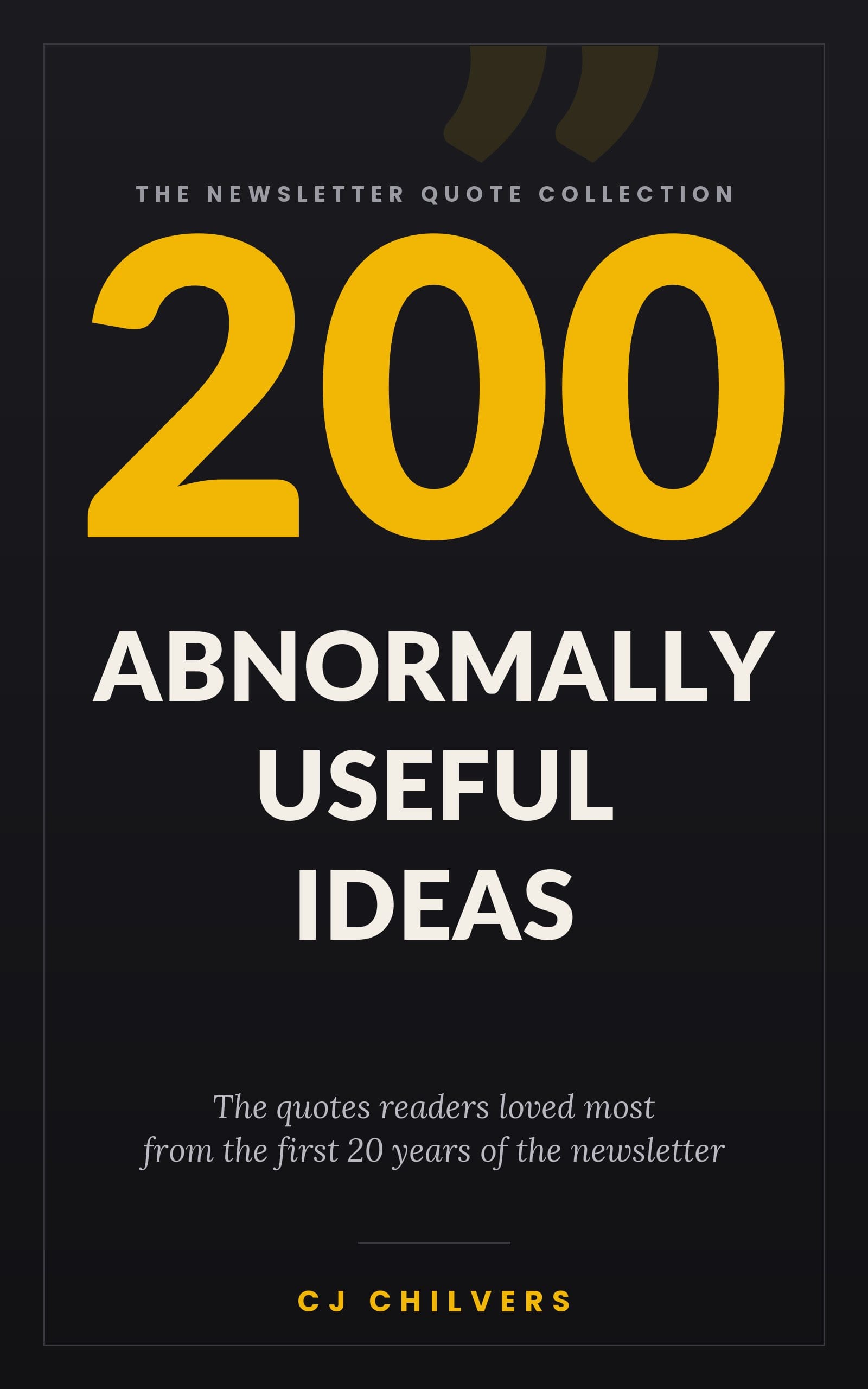
Over in the VIP Lounge, I published a small ebook of readers’ favorite quotes from 20+ years of publishing.
I started it last month because I thought it would be the easiest project ever — a nice extra for paid members, filtering my collection of ~2,000 quotes down to the 200 most highlighted.
It was not easy.
Check out the intro to find out why.
Now, to create a “gardened” archive, I’ve started going back as far as 1987 to try to dig up my first issue of my first newsletter. I just really want to know how many of these things I’ve sent out and how many are should be shown in public…or burned in a giant fire.
Either way, it should be fun. Thanks for reading!
— CJ
Fender is destroying a billion-dollar brand in record time.
Fender f@cked up. Bad. After sending out an over-the-top cease-and-desist letter to rival guitar companies that was ill-conceived and ill-timed (call it “ill communication”), Fender is facing a massive boycott from artists, influencers, and customers. How many times do we have to say this? People trust people more than companies. Customers got their news on the scandal from influencers they know and trust, like YouTubers Phil McKnight and Blues Lawyer Matt Esq., who clarified why Fender is in the wrong. Lifestyle brands cost billions to build, but can be brought to their knees overnight by a trusted creator. That’s real power. Until brands realize this, the marketing arbitrage of a lifetime will continue.
Did AI overviews kill nonfiction books?
Nonfiction authors already have several trends working against them right now. People are reading fewer books. Younger people are less capable of reading books. This past week, Tim Ferris and Seth Godin (in the comments of the post), confirmed their book sales are plummeting fast, probably due to Google AI overviews. I’d add that YouTube is also playing a big role. Tim says he’s committed to long-form writing no matter what. Seth says that certain kinds of nonfiction books are forever. The truth is, nonfiction books never make much money for 99.99% of authors. They’re branding tools. The good news: I bet it’s much easier to become a bestseller now.
A lot of us have made a career of number 3.
“I still care about my craft, my output, and my reputation, and find that it’s hard to be that kind of person today.” — Jason Rodriguez
“There are three ways to make a living: 1. Lie to people who want to be lied to, and you’ll get rich. 2. Tell the truth to those who want the truth, and you’ll make a living. 3. Tell the truth to those who want to be lied to, and you’ll go broke.” — Jason Zweig via Daring Fireball
The best takedown of Substack that I didn’t write.
I’m always asked about the pros and cons of Substack, so I recognize a good, concise explanation when I see it. This one from Tyler Denk has been saved as my new reply: “Email is the most powerful distribution channel on the internet because it’s one of the only channels where creators actually own the relationship with their audience. And the distribution happens without intermediaries — that’s the beauty of an open protocol. Meanwhile, Substack is an intermediary. When you upload your list to their platform, that becomes their user, not your reader. They take over the audience relationship and send them emails on your behalf to subscribe to other creators and to download their app (both of which are KPIs that benefit their business, not yours). And once your subscribers download their app it’s game over. You’ve handed your audience over to them. They control the distribution now.”